

BPC-157 + TB-500

BPC-157 + TB-500
Research Use Only
All products are intended solely for laboratory research and are not for human or animal consumption. These products are not drugs, foods, or cosmetics, and are not intended to diagnose, treat, cure, or prevent any disease. Purchasers must be 21 years or older. By purchasing, the buyer agrees to use these products in compliance with all applicable laws and regulations.
BPC-157 + TB-500 Overview
This blend combines two synthetic peptides studied for their signaling pathway interactions. BPC-157 has been studied for its potential effects on molecular signaling, structural remodeling, and cytokine modulation, while TB-500 (a fragment based on Thymosin Beta-4) is associated with epithelial modeling, angiogenesis, and extracellular matrix dynamics. Together, they are investigated for complementary activity across multiple pathways in controlled experimental settings.
History
The blend draws on two parallel lines of peptide research. BPC-157, derived from a natural protein fragment in gastric tissue, was first characterized to investigate its signaling and remodeling effects on structural and epithelial systems. Thymosin β-4 (Tβ4) — and its synthetic fragment TB-500 — originated from the discovery of thymosins in the 1960s by Allan L. Goldstein and colleagues, which led to interest in Tβ4's role in extracellular matrix dynamics and pathway modeling.
BPC-157 Structure
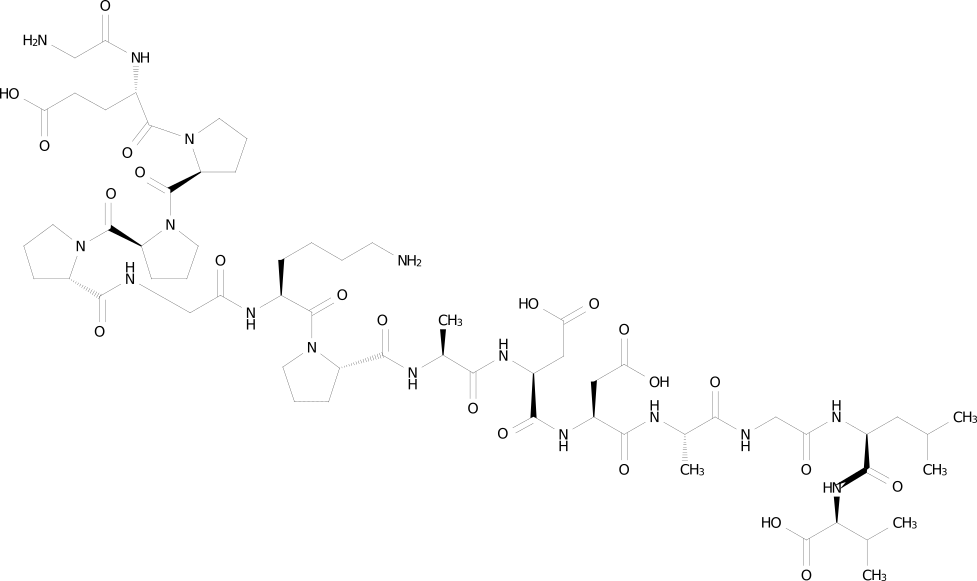
Molecular Formula: C₆₂H₉₈N₁₆O₂₂
Molecular Weight: 1419.5 g/mol
PubChem ID: 108101
TB-500 Structure

Molecular Formula: C₂₁₂H₃₅₀N₅₆O₇₈S
Molecular Weight: 4963.4 g/mol
CAS: 77591-33-4
PubChem ID: 108101
Research Findings
BPC-157 and TB-500 have been studied in structural, vascular, epithelial, and systemic models, with research exploring effects on tendon-to-bone interface modeling, collagen organization, angiogenesis, cell migration, and systemic signaling. These findings highlight roles in matrix dynamics and vascular pathways in preclinical settings.
Key Areas of Research:
- Structural: Tendon-to-bone, collagen, matrix
- Vascular: Angiogenesis, nitric oxide, remodeling
- Epithelial: Migration, signaling, matrix
- Systemic: Gastric, survival, pathway dynamics
Together, these findings suggest broad experimental applications for BPC-157 and TB-500 across multiple biological pathways. Their combined influence on collagen synthesis, vascular formation, and systemic signaling provides a versatile foundation for research into molecular remodeling and pathway dynamics.
References
Sikirić, P., et al. (1993). A new gastric juice peptide, BPC. An overview of the stomach-stress-organoprotection hypothesis and beneficial effects of BPC. Journal of Physiology (Paris), 87(5), 313–327.
Huff, T., Müller, C.S., Otto, A.M., Netzker, R., & Hannappel, E. (2001). β-Thymosins, small acidic peptides with multiple functions. International Journal of Biochemistry & Cell Biology, 33(3), 205–220.
Staresinic, M., et al. (2003). Gastric pentadecapeptide BPC 157 accelerates healing of transected rat Achilles tendon and in vitro stimulates tendocyte growth. Journal of Orthopaedic Research, 21(6), 976–983.
Sosne, G., et al. (2007). Thymosin beta 4 suppression of corneal NF-κB: a potential anti-inflammatory pathway. Experimental Eye Research, 84(4), 663–669.
Chang, C.H., et al. (2011). The promoting effect of pentadecapeptide BPC 157 on tendon healing involves tendon outgrowth, cell survival, and cell migration. Journal of Applied Physiology, 110(3), 774–780.
Esposito, S., et al. (2012). Synthesis and characterization of the N-terminal acetylated 17–23 fragment of thymosin beta 4 identified in TB-500. Drug Testing and Analysis, 4(9), 733–738.