

DSIP

DSIP
Research Use Only
All products are intended solely for laboratory research and are not for human or animal consumption. By purchasing, the buyer agrees to use these products in compliance with all applicable laws.
DSIP Overview
DSIP is a small amphiphilic peptide consisting of nine amino acids (Trp-Ala-Gly-Gly-Asp-Ala-Ser-Gly-Glu) with demonstrated effects on circadian signaling and neuroendocrine regulation in experimental models. Originally identified through its ability to modulate delta-wave patterns in experimental systems, DSIP has been studied for its influence on circadian rhythms, electroencephalographic patterns, and hypothalamic-pituitary-adrenal (HPA) axis activity. Research indicates potential modulatory effects on GABAergic and serotonergic signaling systems, corticosterone and ACTH dynamics, and oxidative stress responses in laboratory settings.
Schoenenberger et al. (1977).
History
DSIP was first isolated in 1977 by Monnier, Schoenenberger, and colleagues from the cerebral venous blood of rabbits during slow-wave induction experiments. Initial studies demonstrated that intraventricular administration of this peptide promoted delta-frequency EEG patterns consistent with slow-wave activity. Since its discovery, DSIP has been investigated across neuroscience, endocrinology, and circadian research disciplines for its diverse neuromodulatory properties.
Monnier et al. (1977).
DSIP Structure
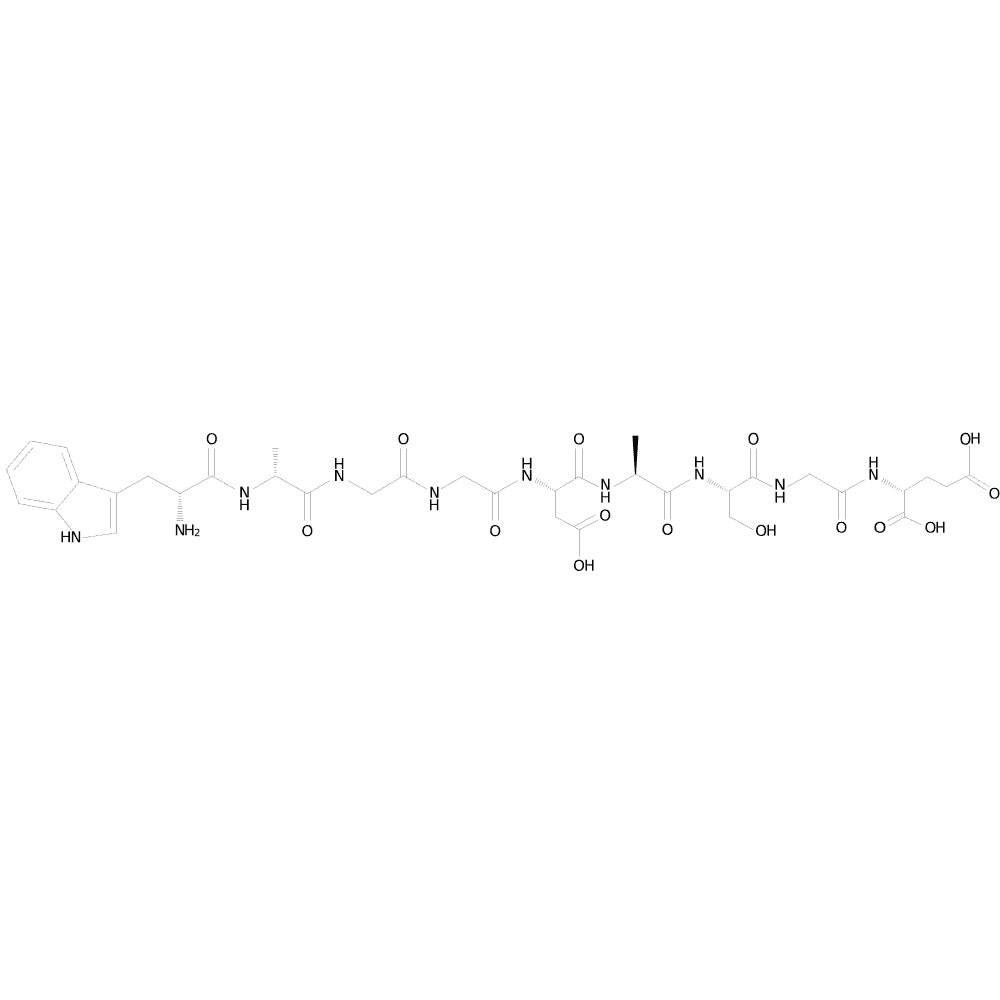
Molecular Formula: C₃₅H₄₈N₁₀O₁₅
Molecular Weight: 848.81 g/mol
PubChem ID: 68760
Research Findings
DSIP has been examined in circadian and neuroendocrine research, with investigations focusing on EEG pattern modulation, HPA axis dynamics, neurotransmitter system interactions, and neuronal signaling effects in various experimental models. Studies explore its influence on circadian biology and molecular stress responses.
Key Areas of Research:
-
Circadian: Delta-wave, REM modulation, entrainment
-
Neuroendocrine: Corticosterone, ACTH, HPA axis
-
Signaling: GABAergic, serotonergic, dopaminergic
-
Neuronal: Oxidative stress, calcium dynamics, viability
Together, these findings demonstrate DSIP's multifaceted actions across circadian, endocrine, and neuronal signaling systems. As a naturally occurring neuropeptide, DSIP provides a research framework for examining circadian dynamics, stress adaptation mechanisms, and neuroendocrine integration in diverse experimental paradigms.
Schoenenberger et al., Proceedings of the National Academy of Sciences, 1977
References
Schoenenberger G.A. et al. (1977). A naturally occurring delta-EEG enhancing nonapeptide in rabbits. Proceedings of the National Academy of Sciences, 74(3):1282-1286.
Graf M.V. & Kastin A.J. (1984). Delta-sleep-inducing peptide (DSIP): update. Peptides, 5(6):1073-1082.
Monnier M. et al. (1977). The delta sleep inducing peptide (DSIP): comparative properties of the original and synthetic nonapeptide. Pflügers Archiv, 369(3):241-243.