

GHK-Cu

GHK-Cu
Research Use Only
All products are intended solely for laboratory research and are not for human or animal consumption. These products are not drugs, foods, or cosmetics, and are not intended to diagnose, treat, cure, or prevent any disease. Purchasers must be 21 years or older. By purchasing, the buyer agrees to use these products in compliance with all applicable laws and regulations.
GHK-Cu Overview
GHK-Cu (glycyl-L-histidyl-L-lysine:copper(II)) is a naturally occurring copper-binding tripeptide studied for its role in molecular signaling, matrix remodeling, and pathway dynamics. In laboratory and preclinical models, GHK-Cu has been associated with modulation of gene expression, angiogenesis, and extracellular matrix activity, making it a valuable tool for research into experimental biology.
History
GHK was first identified in the 1970s in human plasma, where it was observed to decline with age. Subsequent research demonstrated that complexing GHK with copper enhanced its biological activity, particularly in processes related to extracellular matrix dynamics and molecular remodeling. Over the years, GHK-Cu has been extensively studied in models of epithelial biology, angiogenesis, and systemic regulation of gene expression.
GHK-Cu Structure
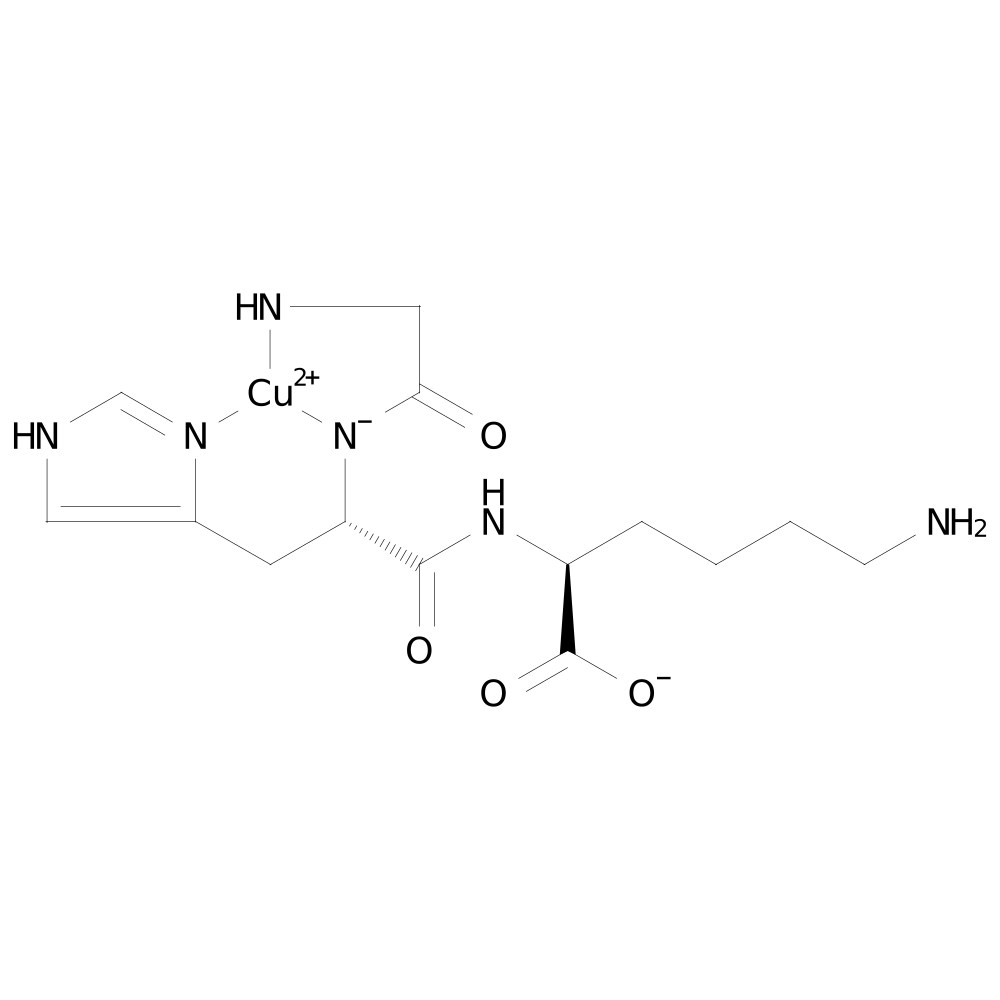
Molecular Formula: C₁₄H₂₄CuN₆O₄
Molecular Weight: ~403.9 g/mol
CAS: 49557-75-7
Research Findings
GHK-Cu has been studied in structural, epithelial, and systemic models, with research highlighting its effects on collagen synthesis, extracellular matrix dynamics, and molecular remodeling. Studies also note its role in epithelial modeling, follicle signaling, and cytokine modulation in preclinical settings.
Key Areas of Research:
- Structural: Collagen, matrix, connective signaling
- Epithelial: Matrix dynamics, remodeling, follicle signaling
- Systemic: Cytokine modulation, viability, pathway dynamics
Together, these findings suggest broad experimental potential for GHK-Cu across structural, epithelial, and systemic pathways. By supporting collagen formation and molecular remodeling while modulating cytokine signaling, GHK-Cu provides a versatile platform for research into matrix dynamics, epithelial biology, and systemic resilience in laboratory settings.
References
Wang, X., Liu, B., Xu, Q., et al. (2017). GHK-Cu-liposomes accelerate scald wound healing in mice by promoting cell proliferation and angiogenesis. Wound Repair and Regeneration, 25(2), 270–278.
Dou, Y., Lee, A., Zhu, L., Morton, J., & Ladiges, W. (2020). The potential of GHK as an anti-aging peptide. Aging Pathobiology and Therapeutics, 2(1), 58–61.
Pickart, L., & Margolina, A. (2018). Regenerative and protective actions of the GHK-Cu peptide in the light of the new gene data. International Journal of Molecular Sciences, 19(7), 1987.
Mao, S., Huang, J., Li, J., et al. (2025). Exploring the beneficial effects of GHK-Cu on an experimental model of colitis and the underlying mechanisms. Frontiers in Pharmacology, 16, 1551843.