

Tesamorelin

Tesamorelin
Research Use Only
All products are intended solely for laboratory research and are not for human or animal consumption. These products are not drugs, foods, or cosmetics, and are not intended to diagnose, treat, cure, or prevent any disease. Purchasers must be 21 years or older. By purchasing, the buyer agrees to use these products in compliance with all applicable laws and regulations.
Tesamorelin Overview
Tesamorelin is a synthetic analog of GHRH, designed to modulate somatotroph axis signaling. In preclinical and experimental research, it has been studied for its ability to influence endocrine pathway activity, regulate downstream cascades, and support investigations into systemic signaling dynamics.
History
Tesamorelin was developed through research into GHRH peptides, building on discoveries that synthetic analogs could prolong the half-life and activity of native GHRH fragments. It was synthesized in the late 1990s and early 2000s as a stabilized peptide with improved pharmacokinetic properties, allowing for sustained endocrine pathway activation in experimental models. Research later expanded into its effects on downstream signaling and systemic function, where it has remained a tool of interest in laboratory and preclinical studies.
Tesamorelin Structure
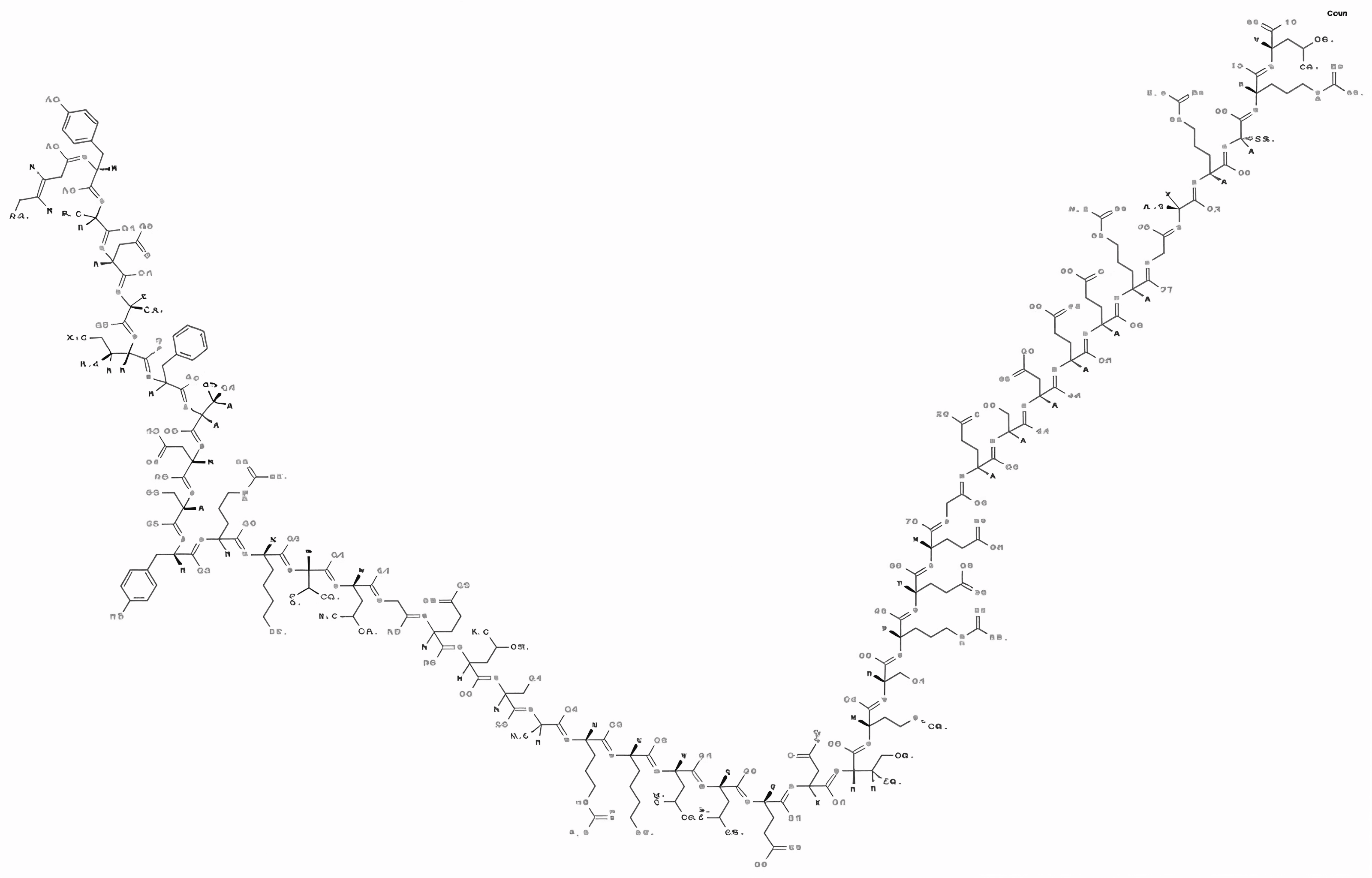
Molecular Formula: C₂₂₁H₃₆₆N₇₂O₆₇S
Molecular Weight: 5135.9 g/mol
CAS: 218949-48-5
PubChem ID: 16132314
Research Findings
Tesamorelin has been studied in endocrine, signaling, and molecular models, with research highlighting its activity in somatotroph axis modulation, downstream cascades, pathway dynamics, and protein synthesis pathways. Studies also report effects on lipid pathway signaling, endocrine markers, and molecular proliferation in preclinical systems.
Key Areas of Research:
- Endocrine: Somatotroph axis, signaling, cascades
- Signaling: Lipid pathways, dynamics, markers
- Molecular: Proliferation, remodeling, protein synthesis
Together, these findings suggest broad experimental potential for Tesamorelin across endocrine, signaling, and molecular pathways. By modulating somatotroph axis activity and influencing downstream cascades and protein synthesis processes, Tesamorelin provides a versatile research platform for exploring molecular remodeling, pathway characterization, and endocrine biology in laboratory settings.
References
Falutz, J., et al. (2007). Metabolic effects of a growth hormone-releasing factor in patients with HIV. New England Journal of Medicine, 357(23), 2359–2370.
Falutz, J., et al. (2010). Effects of tesamorelin, a growth hormone-releasing factor, in HIV-infected patients with abdominal fat accumulation: a randomized placebo-controlled trial with a safety extension. Journal of Acquired Immune Deficiency Syndromes, 53(3), 311–322.
Falutz, J., et al. (2010). Effects of tesamorelin (TH9507), a growth hormone-releasing factor analog, in HIV-infected patients with excess abdominal fat: a pooled analysis of two phase 3 trials. Journal of Clinical Endocrinology & Metabolism, 95(9), 4291–4304.
Stanley, T.L., et al. (2011). Effects of tesamorelin on inflammatory markers in HIV patients with excess abdominal fat: relationship with visceral adipose reduction. AIDS, 25(10), 1281–1288.