

DP1-S

DP1-S
Research Use Only
All products are intended solely for laboratory research and are not for human or animal consumption. These products are not drugs, foods, or cosmetics, and are not intended to diagnose, treat, cure, or prevent any disease. Purchasers must be 21 years or older. By purchasing, the buyer agrees to use these products in compliance with all applicable laws and regulations.
DP1-S Overview
DP1-S is a synthetic peptide analog structurally modified for extended pathway activity. It is studied in preclinical laboratory models for its ability to activate target GLP-1 receptor pathways and modulate downstream molecular signaling associated with endocrine regulation.
History
Research into endocrine peptide biology began in the 1980s with the identification of key peptide roles in signaling pathways. Early synthetic agonists demonstrated promise in extending pathway activation, but limited half-life restricted their utility. DP1-S was later developed with structural modifications at specific amino acid positions to improve target binding and extend duration of action, making it a useful tool for studying peptide biology and downstream signaling in preclinical research models.
DP1-S Structure
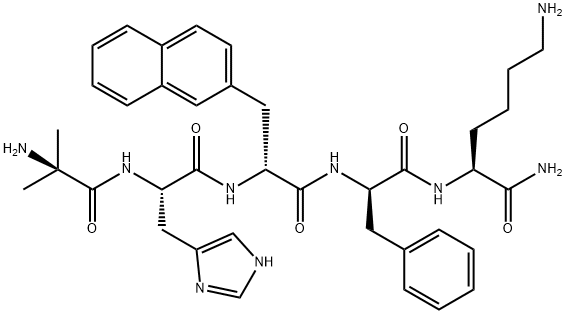
Molecular Formula: C₁₈₇H₂₉₁N₄₅O₅₉
Molecular Weight: 4113.6 g/mol
PubChem ID: 56843331
Research Findings
DP1-S has been studied across multiple biological models, with research highlighting its activity in downstream pathway signaling and molecular response dynamics in laboratory settings.
Key Areas of Research:
- Signaling: Pathway dynamics, downstream cascades
- Endocrine: Target pathway modulation
- Systemic: Lipid pathways, signaling markers
Together, these findings suggest broad experimental potential for DP1-S across multiple biological pathways. By engaging target pathways and influencing downstream molecular signaling, DP1-S provides a versatile platform for investigating pathway-mediated responses and systemic characterization in preclinical laboratory settings.
References
Lau, J., Bloch, P., Schäffer, L., et al. (2015). Discovery of a once-weekly glucagon-like peptide-1 (GLP-1) analogue. Journal of Medicinal Chemistry, 58(18), 7370–7380.
Marso, S.P., et al. (2016). Cardiovascular outcomes with a once-weekly GLP-1 receptor agonist in patients with type 2 diabetes. New England Journal of Medicine, 375(19), 1834–1844.
Wilding, J.P.H., et al. (2021). Once-weekly GLP-1 receptor agonist treatment in adults with overweight or obesity. New England Journal of Medicine, 384(11), 989–1002.