

Selank

Selank
Research Use Only
All products are intended solely for laboratory research and are not for human or animal consumption. These products are not drugs, foods, or cosmetics, and are not intended to diagnose, treat, cure, or prevent any disease. Purchasers must be 21 years or older. By purchasing, the buyer agrees to use these products in compliance with all applicable laws and regulations.
Selank Overview
Selank is a synthetic heptapeptide analog of tuftsin, a natural immunomodulatory fragment of IgG. It is studied in preclinical and laboratory models for its influence on neurotransmitter signaling, stress response pathways, and immune signaling. Research has examined Selank's role in modulating GABAergic activity, monoamine dynamics, and cytokine signaling.
History
Selank was developed at the Institute of Molecular Genetics of the Russian Academy of Sciences in the 1990s as a synthetic analog of tuftsin, modified for improved stability and activity. Early studies explored its immunomodulatory and signaling properties, leading to broader investigations of its effects on neuropeptide signaling, CNS pathway dynamics, and systemic immune modulation in preclinical models.
Selank Structure
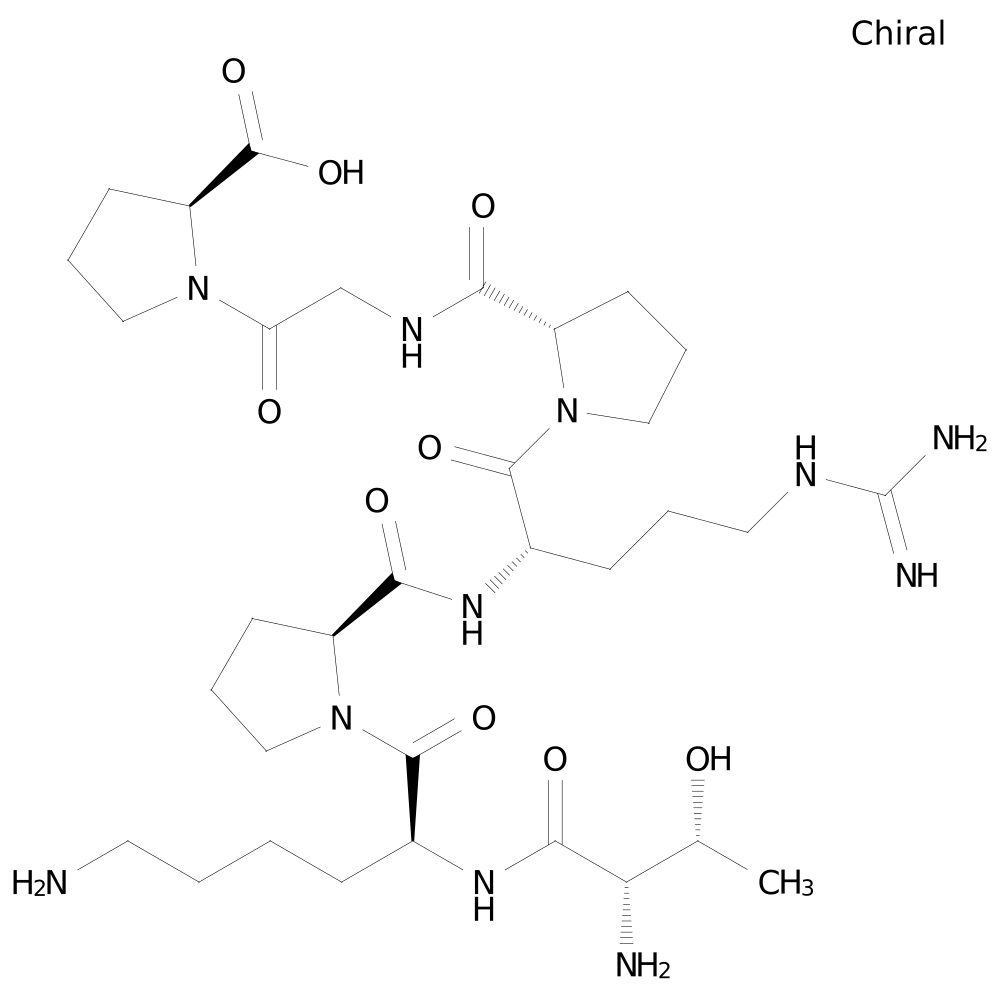
Molecular Formula: C₃₃H₅₇N₁₁O₉
Molecular Weight: 751.9 g/mol
CAS: 129954-34-3
PubChem CID: 11765600
Research Findings
Selank has been studied in neurological, immune, and systemic models, with research highlighting its role in neuropeptide signaling, stress response pathways, and immune modulation. Studies also report activity in neurotransmitter dynamics, cytokine signaling, and pathway responses in preclinical settings.
Key Areas of Research:
- Neurological: Neurotransmitters, stress pathways, signaling
- Immune: Cytokine signaling, modulation, dynamics
- Systemic: Signaling, viability, resilience
Together, these findings suggest broad experimental potential for Selank across neurological, immune, and systemic pathways. By modulating neurotransmitter activity and supporting immune signaling dynamics, Selank provides a versatile platform for research into stress biology, immune modulation, and systemic resilience in laboratory settings.
References
Zozulya, A.A., Kost, N.V., Sokolov, O.Y., et al. (2001). The inhibitory effect of Selank on enkephalin-degrading enzymes as a possible mechanism of its anxiolytic activity. Bulletin of Experimental Biology and Medicine, 131(4), 315–317.
Zozulya, A.A., Neznamov, G.G., Siuniakov, T.S., et al. (2008). Efficacy and possible mechanisms of action of a new peptide anxiolytic Selank in the therapy of generalized anxiety disorders and neurasthenia. Zhurnal Nevrologii i Psikhiatrii imeni S.S. Korsakova, 108(4), 38–48.
Panikratova, Y.R., et al. (2020). Effects of Selank and Semax on resting-state functional connectivity. Doklady Biological Sciences, 490(1), 9–11.